Colorado Scientific Society – Earth Sciences since 1882
The oldest scientific society in the Rocky Mountain region
Founded in 1882, the Colorado Scientific Society promotes knowledge, the understanding of science, and its application to human needs.
We focus primarily on earth science, welcoming members with interests in all fields of science. Learn more.
The ColoSciSoc.org website was running using PHP release 8.2.35, which includes the fixes for the recent PHP security vulnerabilities, when I checked on October 21, 2026.
These fixes had been applied by BlueHost, by our web hosting provider.

Note: The Colorado Scientific Society has adopted the federal fiscal year calendar of Oct 1 – Sept 30 for our expenses and membership. The vast majority of our renewals start late in the calendar year (~Nov) and dribble into the following spring (~March) with very few received outside that window.
Check the membership lists for your status:
Fiscal Year 2026 CSS Paid Membership List (thru end of 2026)
Fiscal Year 2027 CSS Paid Membership List (thru end of 2027)
Social Media accounts for Colorado Scientific Society
Instagram (@coloradoscientificsociety)
Bluesky (@coloradoscientific)
We post announcements of meetings, talks, field trips, and student opportunities on these sites.
Future Colorado Scientific Society Meetings and Field Trips
We normally hold monthly meetings from September through May.
Our meetings are normally now both in-person and virtual.
CSS November Meeting
CSS Poster and Lightning Talk Night for Students and Early Career Earth Scientists
Thursday, November 19, 2026
This is a chance for student and early career earth scientists to present their research via a poster and a Lightning Talk (3 minutes) on their research.
If you presented at GSA, signup below and bring your poster.
All are welcome – no admission charge
Join us at in-person after 6:30 pm for social time before the meeting.
Join Zoom meetings after 6:45
Meeting and Program begin at 7:00
Link to signup for CSS Poster Night below.
People can Join us via Zoom for the Lightning Talks.
To see and discuss the posters, please join us in person.
In-person Meeting at Calvary Church, Golden
See details on attending below.
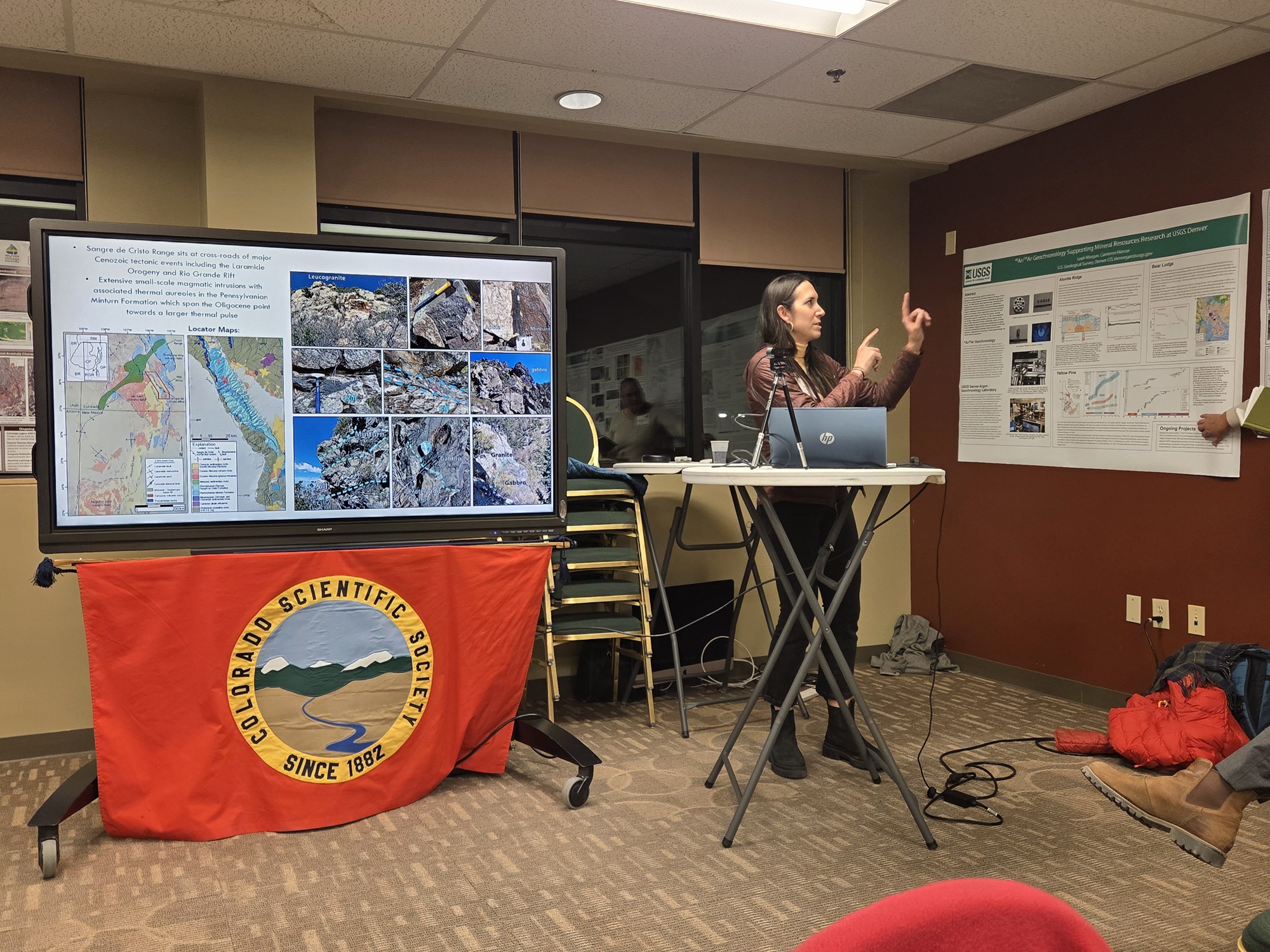
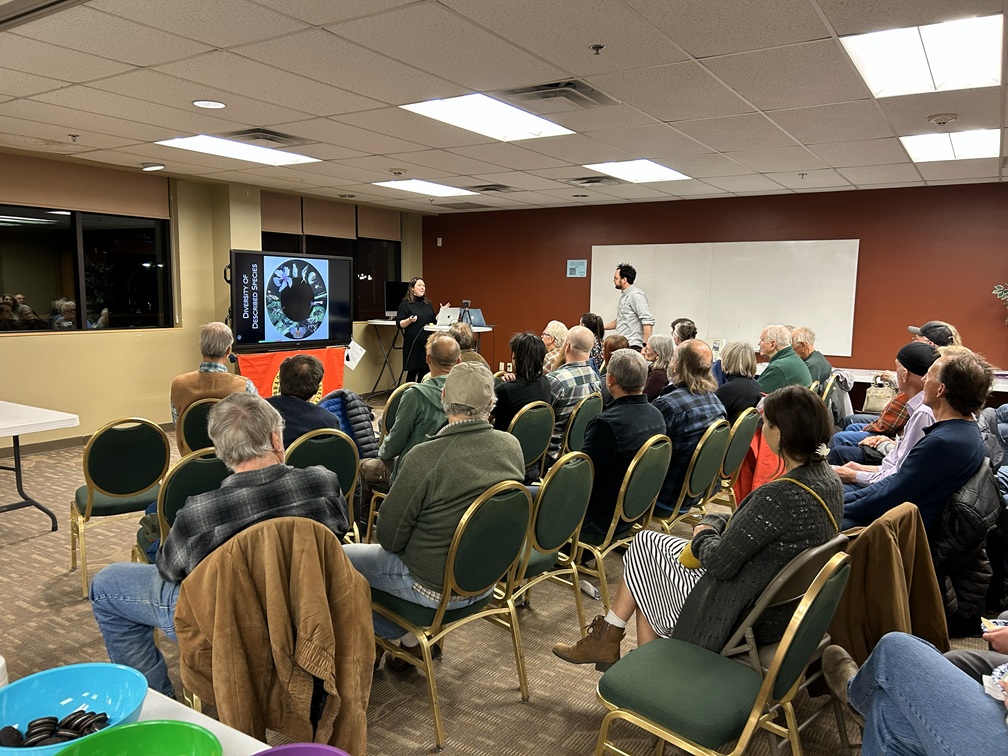
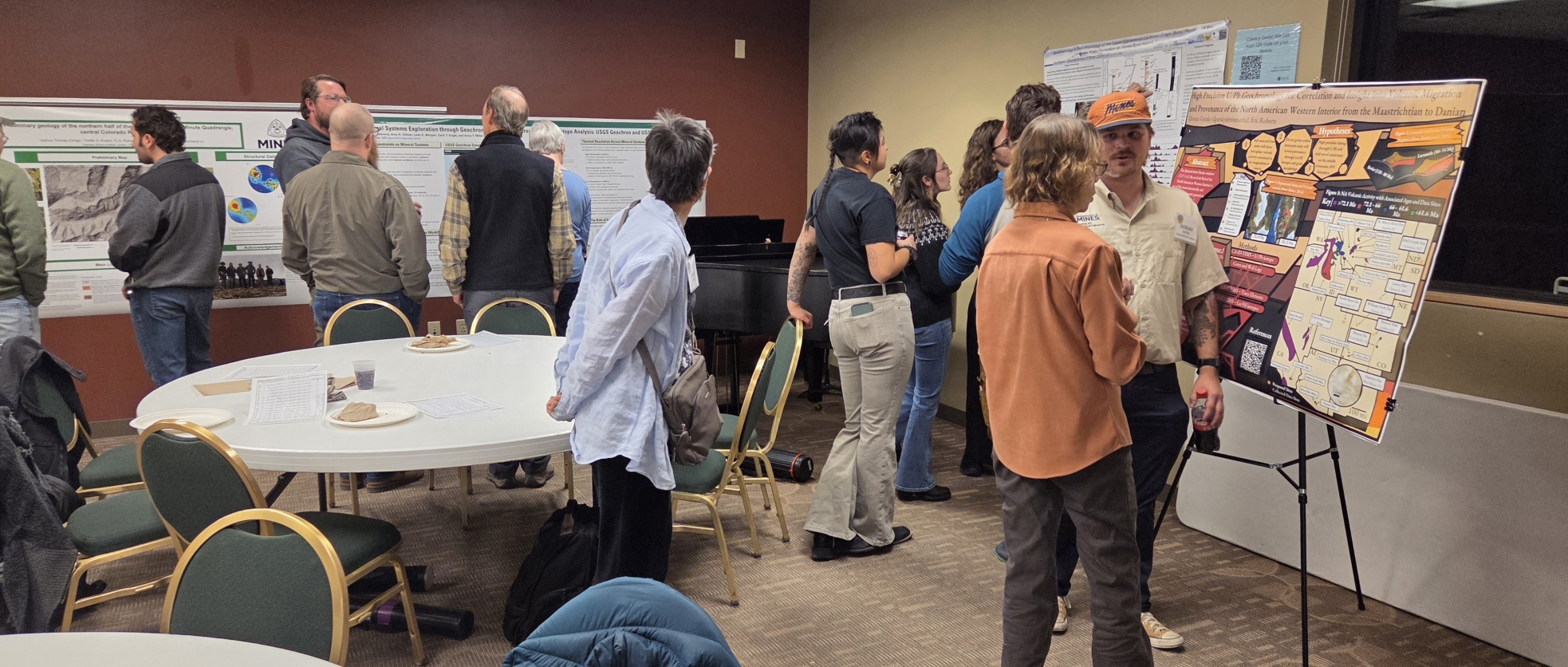
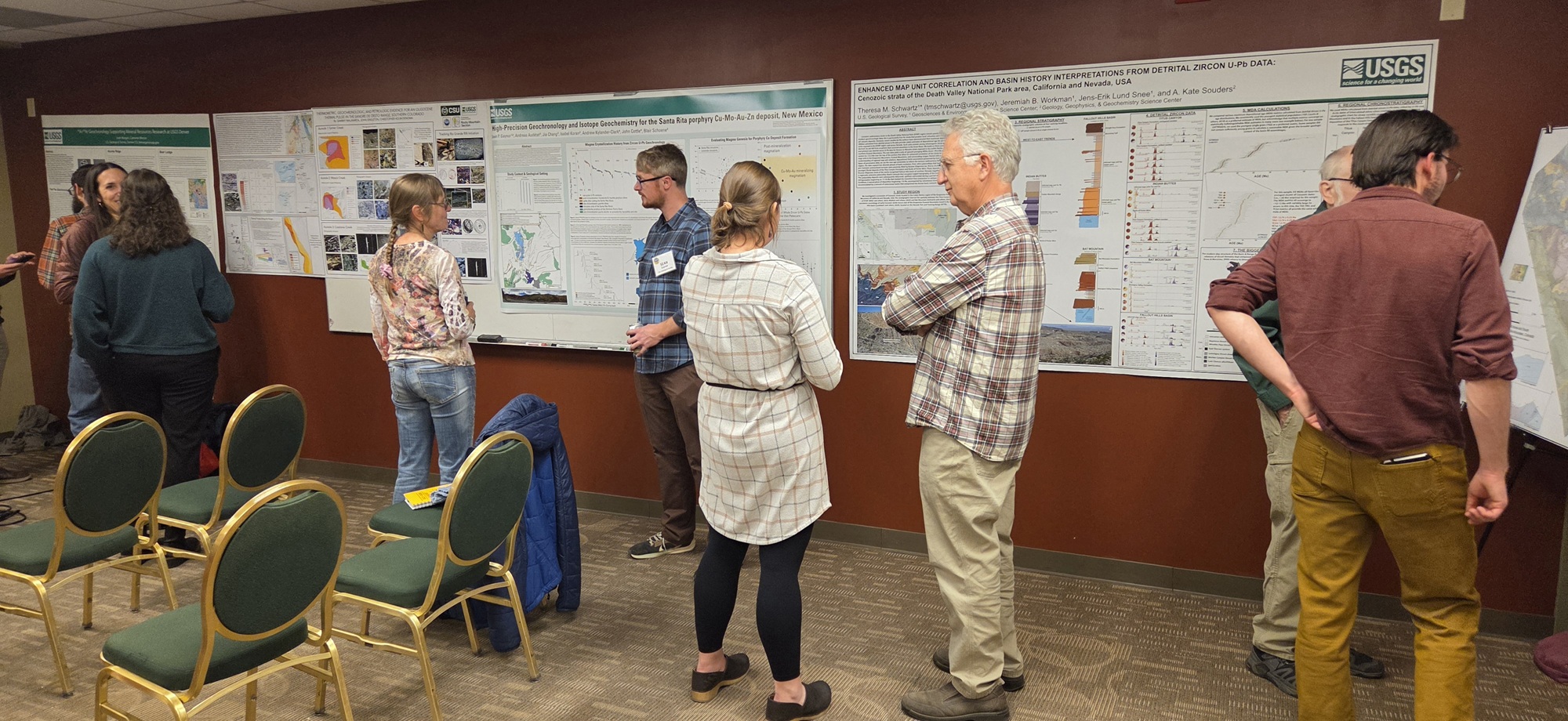
Note: Photos are from last year’s Poster and Lightning Talk meeting.
Students and Early Career Earth Scientists:
Signup for Poster and Lightning Talk by this link.
Presentations and Presenters
(Listed here as they come in.
There may be a few days delay between a submission and it being posted.)
Geochemical Signatures of Major Elements in Shintaku Granitic Rocks, Southwestern Nigerian Basement Complex
Adaeze Ugwu, University of Wyoming, Laramie
Physical Volcanology of Pre-caldera Basalts in the Yellowstone Plateau Volcanic Field: Precursors to Climactic Rhyolitic Eruptions
Maggie Moss, Colorado State University
Organic Carbon Distribution in Submarine Depositional Systems of the Lewis Shale, Greater Green River Basin, WY
Jutamas Charoensuk, Colorado School of Mines
From Rock to Print: Identifying key morphological features in Peltosauria with the use of 3D printing techniques and CT scan data
Dylan Dewitt, Friends of Dinosaur Ridge
Investigation of Continental Trace Fossils, Sedimentology, and Stratigraphy of the Paleogene Lacustrine Claron Formation in Bryce Canyon National Park, Utah
Amanda Rea, Colorado School of Mines
Signup for Poster and Lightning Talk by this link.
In-person Meeting at Calvary Church, Golden
All are welcome – no admission charge
6:30 pm – Social time begins at Calvary Church Golden. Enter off 14th St.
6:45 pm – Join Zoom meeting, if attending remotely
7:00 PM – Meeting starts.
Please arrive early. Church doors are locked, and no one will be at the door to let you in after 7:00 pm.
(Text or call the phone number on the door to get in.)
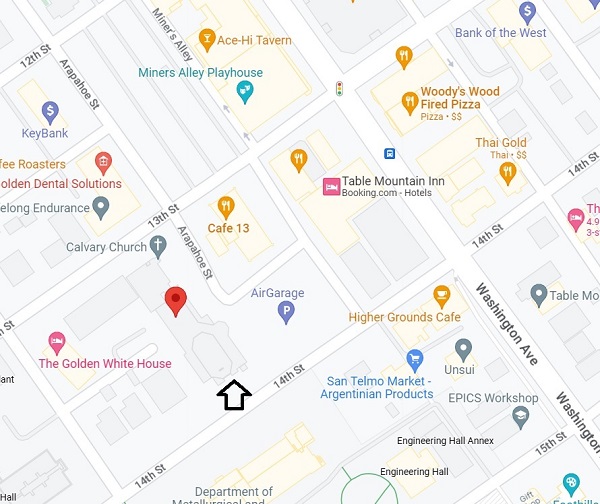
Calvary Church, 1320 Arapahoe St, Golden, CO 80401
Enter off 14th St., going in via the main glass doors on 14th St.
Do not enter the old church above 13th St.
Go through building following the CSS signs to the Community Rooms 1 and 2, where we meet.
The church doors must stay locked, and we will have a person to let you in at the doors off 14th St.
They want to see the presentation too, so please arrive before 7:00 pm.
There will be a phone number that you can text to be let in if you arrive late.
For details about Parking, etc. see Venue – Calvary Church, Golden
Copies of The Geology of Boulder County by Raymond Bridge (2004) will be available for $20.
CSS December Pot Luck Dinner and
Past President’s Address
December, 2026
Speaker: Amy Atwater, Director of Paleontology, Friends of Dinosaur Ridge and current President of the Colorado Scientific Society
This Colorado Scientific Society meeting will be held at the Dinosaur Ridge, Martin G. Lockley Discovery Center, with the Deep Time Detour exhibition.
This is just inside Entrance 1 to Red Rocks Park and Amphitheatre, off HWY-93
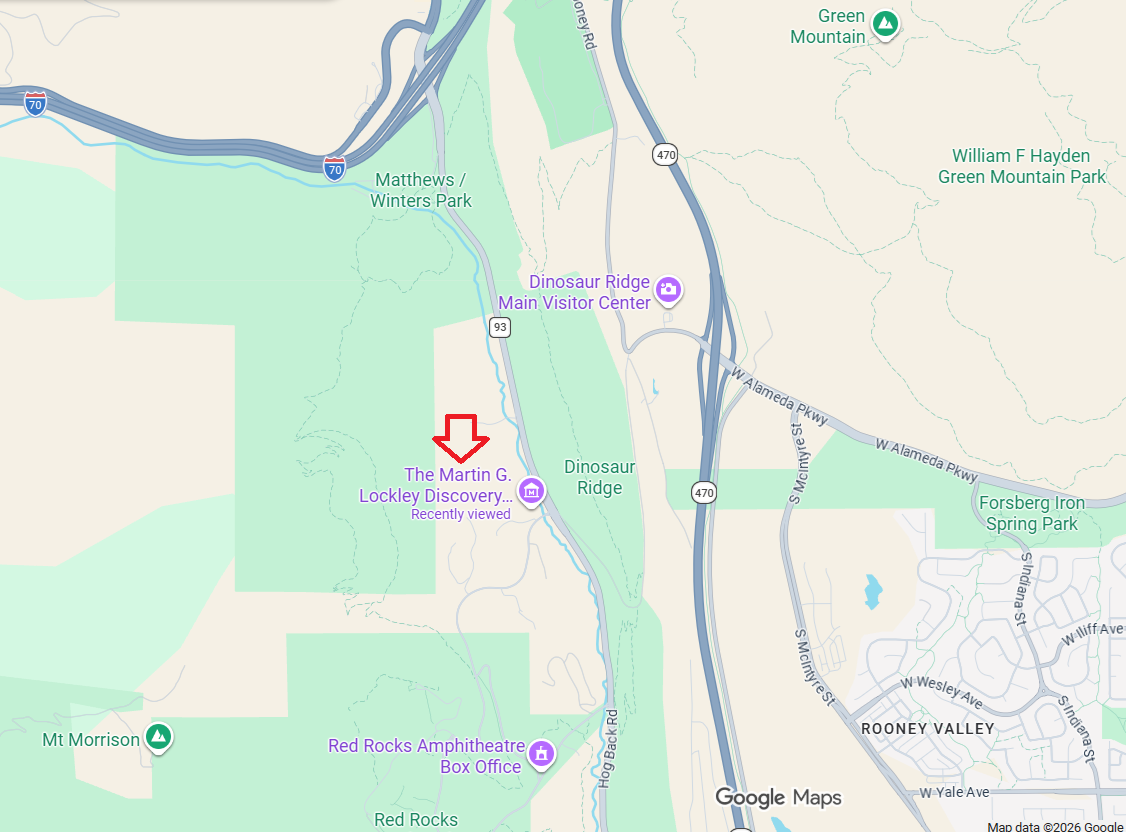
The Discovery Center is on the west side of the Dakota Hogback, aka. Dinosaur Ridge.
(The Dinosaur Ridge main visitor center is on the east side.)
Open a map at: The Martin G. Lockley Discovery Center at Dinosaur Ridge
More details are coming
Please pay your CSS dues for 2026!
You may pay dues online or print out a PDF of the membership form and mail it to us with a check. Continuing your membership in CSS will enable us to continue all our ongoing programs, including our field trips, virtual meetings, Student Research Grants, and more.
See Membership and Donations for the CSS membership PDF and our online membership payment form.
Regular CSS Membership is $25;
Student Membership, $5;
Life Membership, $395.
Send your membership payment, if not done through our online membership payment form, to Colorado Scientific Society P.O. Box 150495 Lakewood, CO 80215-0495.
Thank you!
New and renewal memberships in November and December are also good for the next year.
Read past Colorado Scientific Society Newsletters
Archive of Past Colorado Scientific Society Meetings
Including video recordings of most meetings
About the Colorado Scientific Society
The Colorado Scientific Society was founded in 1882 as a forum for the exchange of observations and ideas on the topics of earth science. Lecture topics largely focus on earth science, and are open to the public. In addition to our monthly lecture series, the society is also active in public service. We fund student research grants, construct and post signs that describe local geologic features, and organize and lead field trips.
The Colorado Scientific Society normally meets on the third Thursday of the month from September through May. (In the summer months of June-August, too many members are out in the field.)
6:30 – Social time at in-person meetings
6:45 – Join Zoom meetings
7:00 – Meeting and Program begin
The Colorado Scientific Society is an Associated Society of the Geological Society of America
Please send comments about the Colorado Scientific Society website to ColoSciSoc.webmaster at gmail.com
We meet at the Calvary Church in Golden and appreciate them sharing their facilities.
We have our December Business Meeting and Potluck Supper at New Terrain Brewing Company and appreciate their support.